


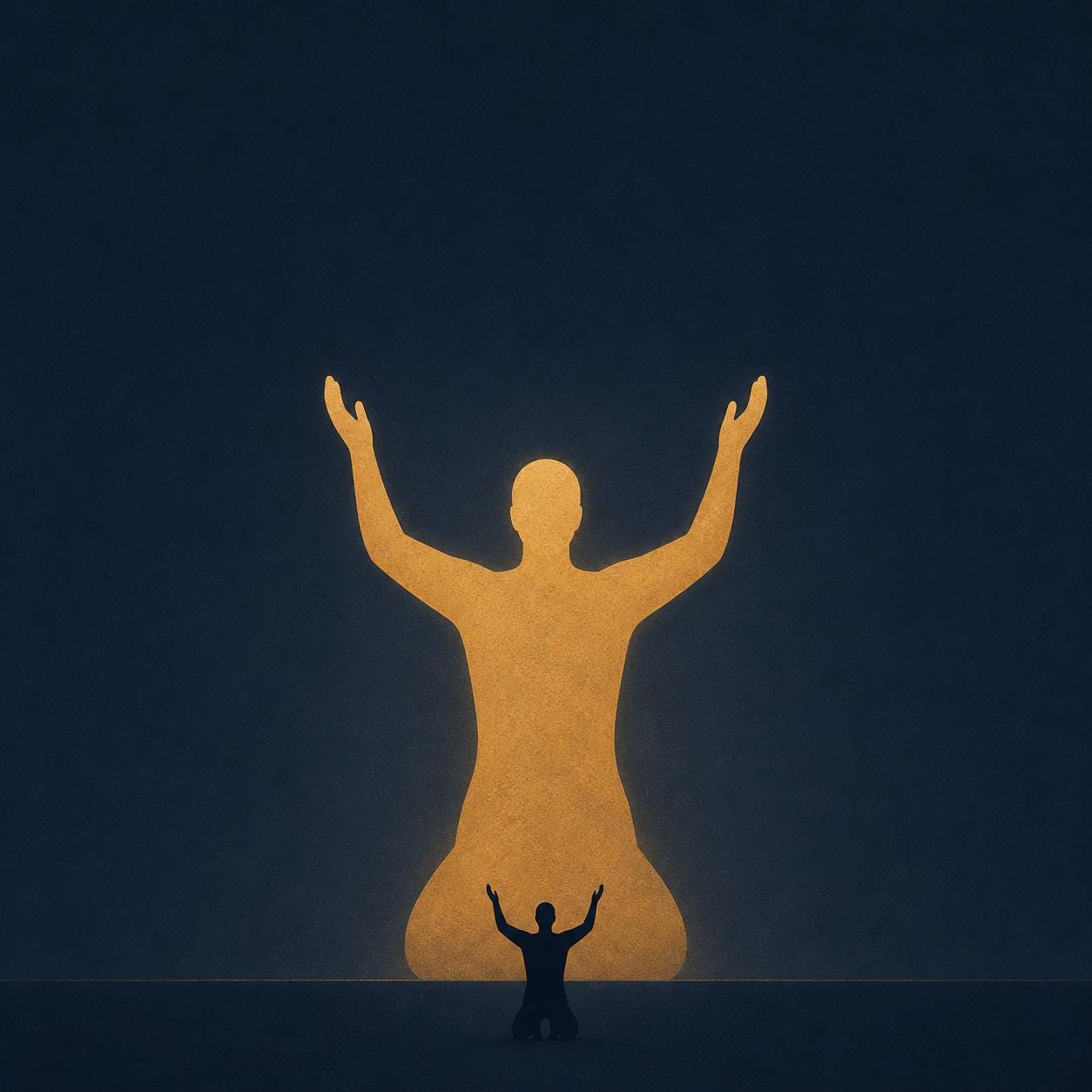
There is a pattern of religiosity in which a man walls himself in before he closes in on anyone else. He flees his inner disquiet into rigidity, and compensates for his weakness by looking down on others and holding women in contempt. Instead of religion serving as a mirror in which the self is refined, it becomes, in his hands, an instrument for inflating it.
Debased religiosity is not the opposite of atheism; it is the opposite of reasoned faith. It is an interpretation that drains spirituality of its meaning and reduces it to ritual husks and machinery of control. Where genuine faith calls for contemplation, mercy, and humility before the absolute, debased religiosity collapses belief into a system of commands to be exploited for domination. The existential question dissolves into a rigid certainty, and the journey of self-purification is traded for blind compliance. This is no modern discovery: al-Ghazālī counted partisan attachment to a school among the veils that block understanding, describing such a man as one whose sight is arrested at what he has heard. The veil, in his account, comes not from a weak hold on religion but from too tight a one. Such a man does not seek God in his own depths or in the vastness of the universe; he confines Him to a disfigured image made from his fears and his complexes — a god who punishes where he is afraid and hates where he hates. Spinoza opened his Theological-Political Treatise with the claim that superstition is engendered, preserved, and fostered by fear; the same begetter is at work here, under another name. Religion is thus inverted: from an experience that liberates into a sealed ideological prison.
Beneath this religiosity lies an unresolved existential crisis: an inability to face one’s own contradictions and to make peace with human frailty. Religion, for such a man, is a refuge from the self before it is any stillness within it; he hardens in flight from his doubts, his repressed desires, his deep sense of insufficiency. Yet flight does not close the wound; it widens it. The more he suppresses himself, the greater his anger grows; and the greater his anger, the more he projects it onto those around him. The first to receive that projection is woman — life, beauty, desire, all that she stands for — for she reminds him of the body he denies and the weakness he is running from, and so he makes her the scapegoat of his own crises. Then anyone unlike him — in religion, in thought, in culture — becomes a mirror showing him what he cannot bear to see: freedom, doubt, plurality. Rigidity, then, is a mask over a buried self-hatred, and whoever despises his own humanity cannot but despise the humanity of others. What looks like strength of faith is in truth a narcissistic wound not yet healed.
Superiority and contempt for people are no proof of certainty; they are a brittle compensation for an inner emptiness — an emptiness that erasing the other will never fill, only facing oneself. Debased religiosity, then, is not a path to God but a flight from the human. Reasoned faith is a humble striving toward meaning, grounded in mercy in action and in the dignity of all. And mercy is not put on trial; it is practiced.